Users can modify colors, shapes, and sizes, making it a versatile option for those looking to create a personalized cursor. With a user-friendly interface, it supports various formats and provides a library of pre-existing cursors. RealWorld Cursor Editor: This tool allows users to create and edit their own cursors from scratch.
By using cameras or sensors, devices can interpret a user's physical movements in three-dimensional space. Gesture recognition technology extends the concept of touch gestures into a more expansive realm. This technology allows for a cursor-less interaction model where users can control applications by waving their hands or making specific gestures.
Security and compliance: Microsoft’s robust security measures ensure data protection and regulatory compliance. Comprehensive suite: Provides a wide range of AI services, from cognitive services to machine learning capabilities. Scalability: Azure’s cloud infrastructure allows businesses to scale their AI solutions as needed.
Customizability: Offers extensive customization options to build tailored conversational experiences.
Open Source Cursor Alternatives-source: Free to use and modify, which is beneficial for developers and startups. Strong community support: A dedicated community provides resources, tutorials, and assistance.
Observations noted instances of individuals striking up conversations while waiting in line for food trucks or sharing benches. These spontaneous interactions contributed to a sense of community, as people exchanged smiles, greetings, and small talk, fostering a friendly atmosphere. Casual Encounters: The park also served as a venue for casual encounters among strangers.
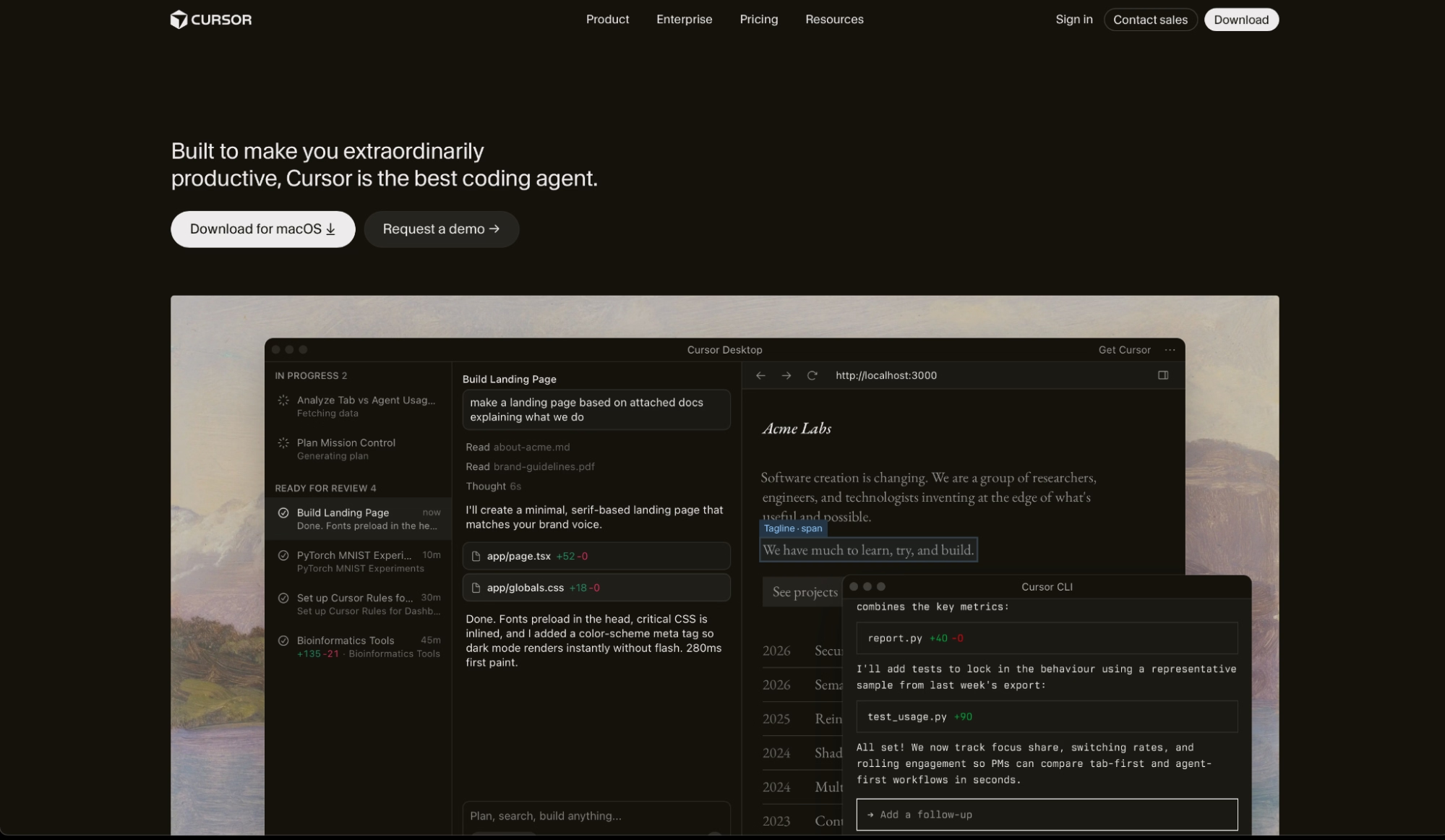
However, as with any technology, users may seek alternatives that better suit their specific needs, preferences, or budget constraints. In the rapidly evolving landscape of artificial intelligence, Cursor AI has emerged as a significant player, providing innovative solutions for various applications ranging from data analysis to natural language processing. This article explores various alternatives to Cursor AI, examining their features, benefits, and potential use cases.
Cursor AI has made significant strides in the AI landscape, but it is not the only option available. By carefully evaluating these alternatives based on features, integration capabilities, and budget, organizations can harness the power of AI to enhance productivity and drive innovation. With a variety of alternatives like OpenAI GPT-3/4, Microsoft Azure AI, IBM Watson, Google Cloud AI, Hugging Face, and Rasa, businesses can find solutions that better meet their specific requirements.
This article delves into the available free cursor alternatives, highlighting their features, advantages, and how they can enhance user experience. In the digital age, the customization of user interfaces has become a significant aspect of personalizing our computing experience. One of the most visible elements of this customization is the cursor. While many users are content with the default cursor provided by their operating system, others seek alternatives that offer unique designs, enhanced functionality, or improved accessibility.
Free cursor alternatives offer an exciting opportunity for users to personalize their computing experience. With a variety of options available, from cursor creation tools to extensive libraries of designs, users can find the perfect cursor that suits their style and needs. Whether for aesthetic reasons, accessibility, or personal expression, the world of cursor customization is ripe for exploration and innovation. As technology continues to evolve, the importance of customization and accessibility in user interfaces will only grow, making free cursor alternatives an essential aspect of digital interaction.
The demographic diversity was evident, as individuals from various ethnic backgrounds, age groups, and social classes converged in the park, creating a vibrant tapestry of urban life. Observations indicated that weekends were particularly busy, with a significant increase in foot traffic compared to weekdays. The park attracted a diverse range of visitors, including families with children, young adults, elderly individuals, and tourists.
Additionally, AI-driven predictive analytics can help healthcare providers identify at-risk patients and personalize treatment plans, ultimately improving patient outcomes and reducing costs. For example, AI systems can detect early signs of diseases such as cancer from imaging data, often with greater accuracy than human radiologists. Machine learning algorithms are now being used to analyze medical images, predict patient outcomes, and assist in drug discovery. The healthcare sector has been particularly impacted by AI advancements.
These cursor alternatives cater to diverse user needs, promoting inclusivity and efficiency in digital interactions. The future of human-computer interaction is bright, and with these cursor alternatives, we are just beginning to scratch the surface of what is possible. As we move forward, it is essential for developers and designers to embrace these technologies, creating interfaces that are not only functional but also intuitive and engaging.